
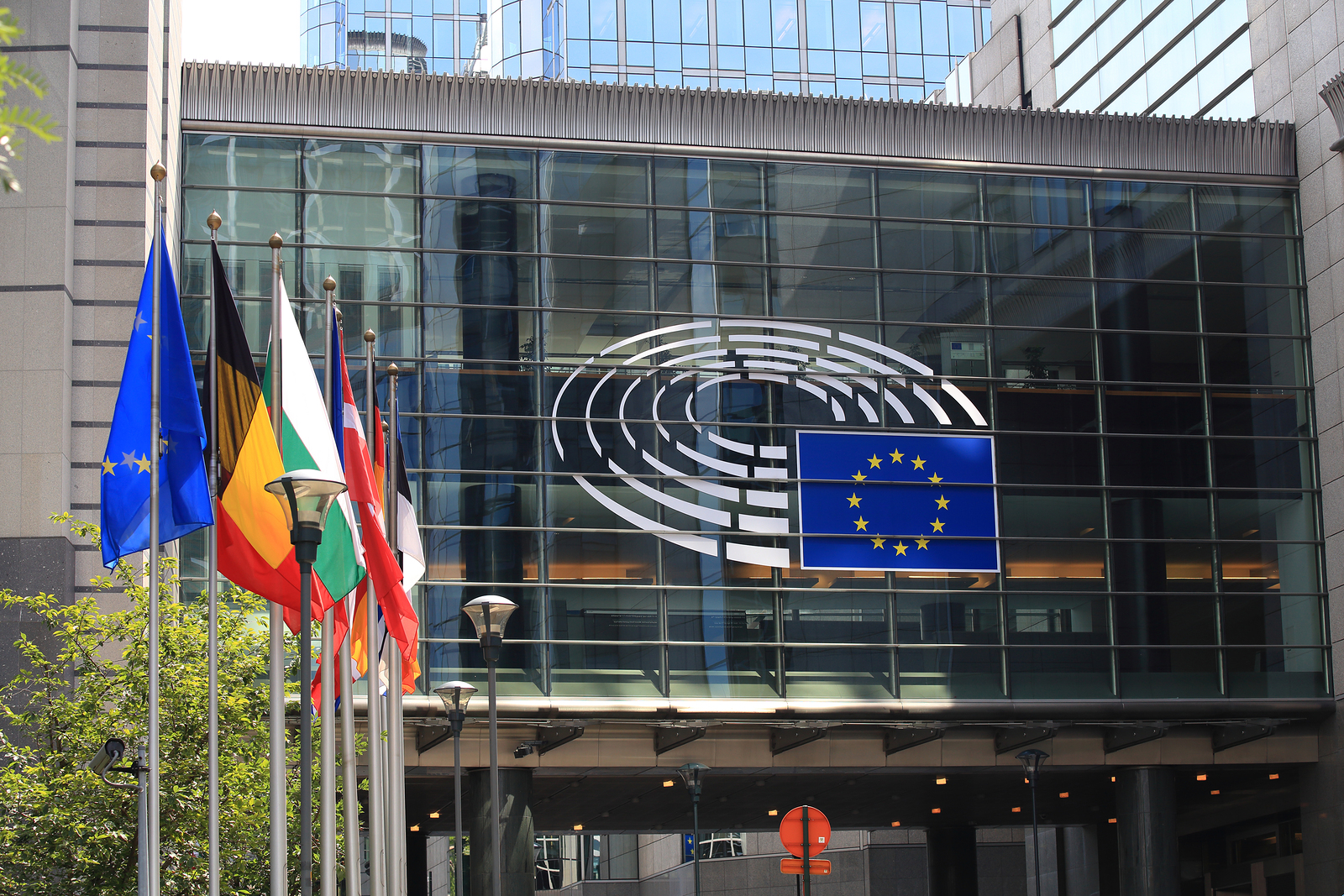
There have been a lot of campaigns to act against climate change over the last year, which might have influenced the European Parliament to reduce its environmental impact.
The group recently revealed its environmental targets for 2019-2024, which included lowering its carbon footprint by 40 per cent compared with 2006; cutting carbon emissions from transporting people by nearly a third from 2006; achieving a reduction in energy consumption of 20 per cent in comparison with 2012; and decreasing paper consumption by half since 2010-2014.
Vice-president of the European Parliament Heidi Hautala, responsible for the EU Eco-Management and Audit Scheme (EMAS), said the organisation “is well placed to lead the transition towards a sustainable, climate-neutral, and resource-efficient European economy and society”.
She went on to say “time is running out”, which means the pressure is on to make changes.
European Parliament President David Maria Sassoli also stated: “We have to go further to live up to our commitment of continuously improving our environmental performance.”
One of the ways countries can reduce their carbon footprint is by swapping gas oil for industrial heating oil.
Multiburn QP5 is not only more energy-efficient, it is the most economical alternative to gas oil. It is produced through recovered materials, which is how it can keep costs down, making it an ideal choice for energy intensive industries.
Last year, the UK government became the first major economy to pass laws to bring greenhouse gas emissions to net zero by 2050. This means any emissions would be balanced out by schemes that would offset an equivalent amount of greenhouse gases from the atmosphere. This can be done by planting trees or using modern carbon capture and storage technology.
This is far more ambitious than its previous target of reducing carbon emissions by 80 per cent of 1990 levels.
Energy and clean growth minister Chris Skidmore spoke publicly when the laws were passed in June 2019. He stated the government is committed to “putting clean growth at the heart of our modern Industrial Strategy”.
He went on to say: “We’re pioneering the way for other countries to follow in our footsteps driving prosperity by seizing the economic opportunities of becoming a greener economy.”
Britain’s goal is one of the most ambitious targets in the world. However, the government decided to go ahead with it following recommendations by the Committee on Climate Change, the UK’s independent climate advisory body.
When it comes to environmental targets the UK government has already attained, it revealed it has cut emissions by 42 per cent from 1990 levels, which means it was already more than halfway to achieving its previous goal of an 80 per cent reduction by 2050.
With regards to the European Parliament, the organisation became the first 100 per cent carbon-neutral EU institution by offsetting its irreducible carbon emissions. It also cut its carbon emissions by 37.7 per cent compared with 2006, and its electricity consumption has declined by 14.9 per cent since 2012, while its waste recycling rate soared to 69.1 per cent.