
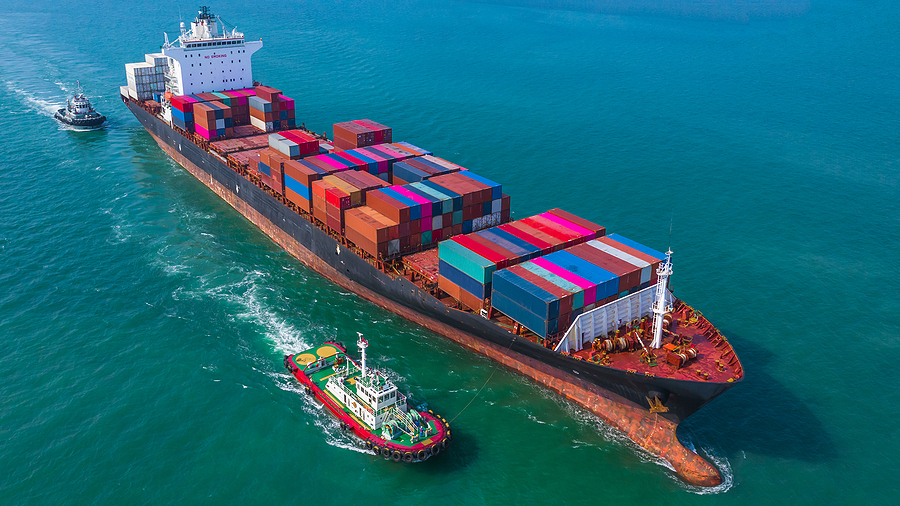
Industry experts are warning that shortages of products and delays could be seen in the lead-up to the Christmas period because of disruption in the global container shipping industry, with the knockon effects potentially taking months to resolve.
Over the course of the pandemic, demand for products has fluctuated dramatically, leaving many shipping firms struggling to cope. This, coupled with the recent blockage of the Suez Canal (where a container ship the length of four football pitches found itself wedged across the canal for six days, blocking the very busy trade route), has caused all sorts of issues.
And now, as the BBC reports, Guangdong province in southern China is currently facing an outbreak of coronavirus, causing acute congestion at the ports in the region. This has led to delays in shipments, making tensions across global supply chains even worse.
The problems began over a year ago, with a slowdown at the start of the pandemic then followed up by a surge in activity, with customers suddenly finding themselves unable to carry on life as they normally would – resulting in a serious uptick in the purchase of consumer goods.
This then led to ports in North America and Europe becoming clogged, as too many ships were arriving simultaneously. In addition, the supply of empty shipping containers dried up, with too many left sitting at the quayside.
Now, the Yantian International Container Terminal, a port in the Shenzhen region of China, is currently operating at a fraction of what its typical capacity would be – and this has been the case since late May, with restrictions in place to control the spread of covid-19.
Peter Sands, chief shipping analyst at industry organisation Bimco, explained: “On a global network scale, these states of emergency are a permanent situation right now.
“But the issue with Yantian is we need more transparency and openness from the local authorities. And we aren’t getting that, which means there is a lot of uncertainty in developing contingency plans.”
For retailers in the UK, this means that there may well be a shortage of goods in the runup to Christmas. James Baker, containers editor at Lloyd’s List, commented on the matter, saying that he now expects the disruption to continue for at least another year.
“One of the issues at the moment, which is aiding the congestion, is the fact that everyone knows that the lead times are really slow, so retailers are booking their Christmas goods already,” he added.
Consumers may also find that products are more expensive as well, as a result of the ongoing crisis, driven by soaring prices of shipping goods around the world. And it’s also possible that some products may be harder to come by, because companies are choosing not to ship to certain locations as a way of keeping costs down.