
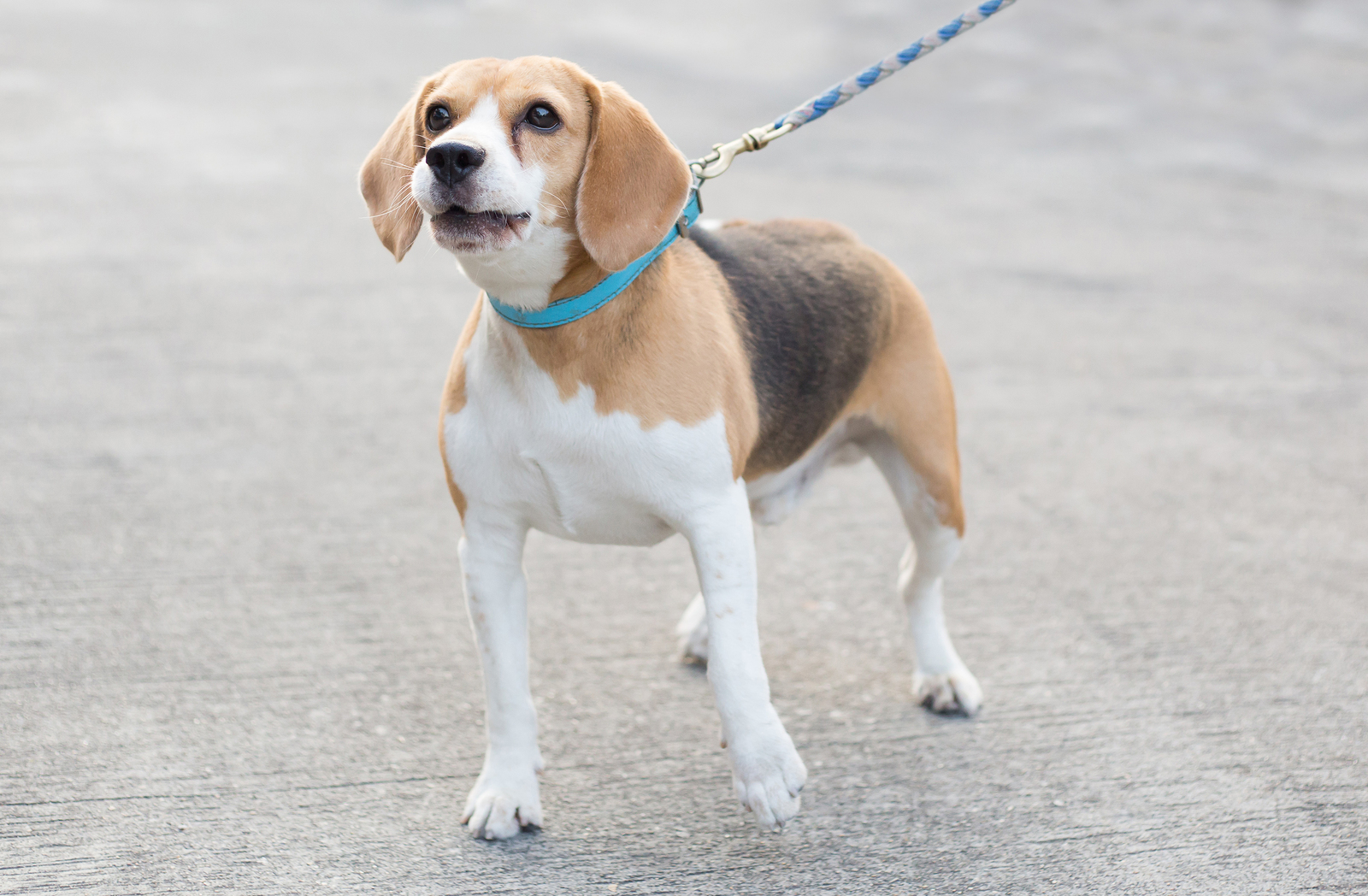
In the latest pandemic development, it seems that dogs are now being trained to see if they’re able to sniff out coronavirus and, if they can, they could be used to screen everyone, including people with no symptoms.
Charity Medical Detection Dogs has already been successful in training dogs to spot the signs of Parkinson’s, cancer and malaria, according to the BBC. And trials are now in the pipeline in collaboration with the London School of Hygiene and Tropical Medicine (LSHTM), and Durham University, to see if they can detect this particular virus as well.
The charity explained that each disease has its own unique smell and these dogs could be ready to sniff COVID-19 out in six weeks in order to help provide a “rapid, non-invasive diagnosis”. It’s also possible that they could be trained to tell if someone has a fever.
Professor James Logan, head of disease control with the LSHTM, observed that dogs are able to detect the smell of malaria with a level of accuracy that is “above the World Health Organisation standards for a diagnostic”.
And professor Steve Lindsay from the Department of Biosciences at Durham University noted as well that these dogs could also take up residence at airports to help identify people carrying the virus.
“This would help prevent the re-emergence of the disease after we have brought the present epidemic under control,” he was quoted by the news source as saying.
It is amazing to think that man’s best friends could have such sensitive noses as to be able to successfully spot anyone carrying the virus… but this isn’t all their snouts are great for!
A recent study published in Scientific Reports found that epileptic seizures can also be detected through smell, with the dogs capable of detecting them up to 45 minutes before they occur.
Carried out by Medical Mutts and a team of French researchers, the study involved collecting samples of breath and sweat from people with different types of epilepsy, some taken during or after a seizure, and others taken after exercise or at rest.
These samples were then placed in seven different steel containers and positioned around the room. The dogs (Casey, Dodger, Lana, Zoey and Roo) were then let in, having been trained to stop and stand still if they were able to detect the smell of a seizure.
Apparently, three of the clever pooches – Casey, Dodger and Zoey – sniffed out the seizure scent with 100 per cent accuracy. The other two, Lana and Roo, weren’t as accurate as they hadn’t been given as much time to train – but they were still able to identify two-thirds of the samples correctly on their first attempt.
A dog’s nose has as many as 300 million olfactory receptors, which makes it up to 100 thousand times stronger than a person’s. This means they’re able to detect a few scent molecules among trillions – and scientists are now trying to build their own electronic noses that are capable of doing the same.
And it’s not just human diseases that dogs are so good at detecting… they’re also able to detect diseased trees with around 99 per cent accuracy, so it seems.
According to the World Economic Forum, scientists in the US are now training dogs to detect a disease that’s proving disastrous for the world’s orange trees – huanglongbing, also known as citrus greening.
This particular disease stops fruit from ripening and eventually kills the tree, spread by an insect called the Asian citrus psyllid. It is now found in the majority of citrus-producing areas in the world. In Florida, for example, it has led to a drop of more than 70 per cent in orange production.
Early detection is essential because there is no cure and trees can have the disease for months and even years without showing symptoms. But the US Horticultural Laboratory has now trained 20 dogs to sniff out the bacterium that causes the disease.
The paper, published in the journal Proceedings of the National Academy of Sciences, found that the dogs were able to detect trees with the disease with around 99 per cent accuracy and within two weeks of infection.
If you’re interested in puppy training in Southampton, get in touch with us here at 101 Dog Solutions today.