
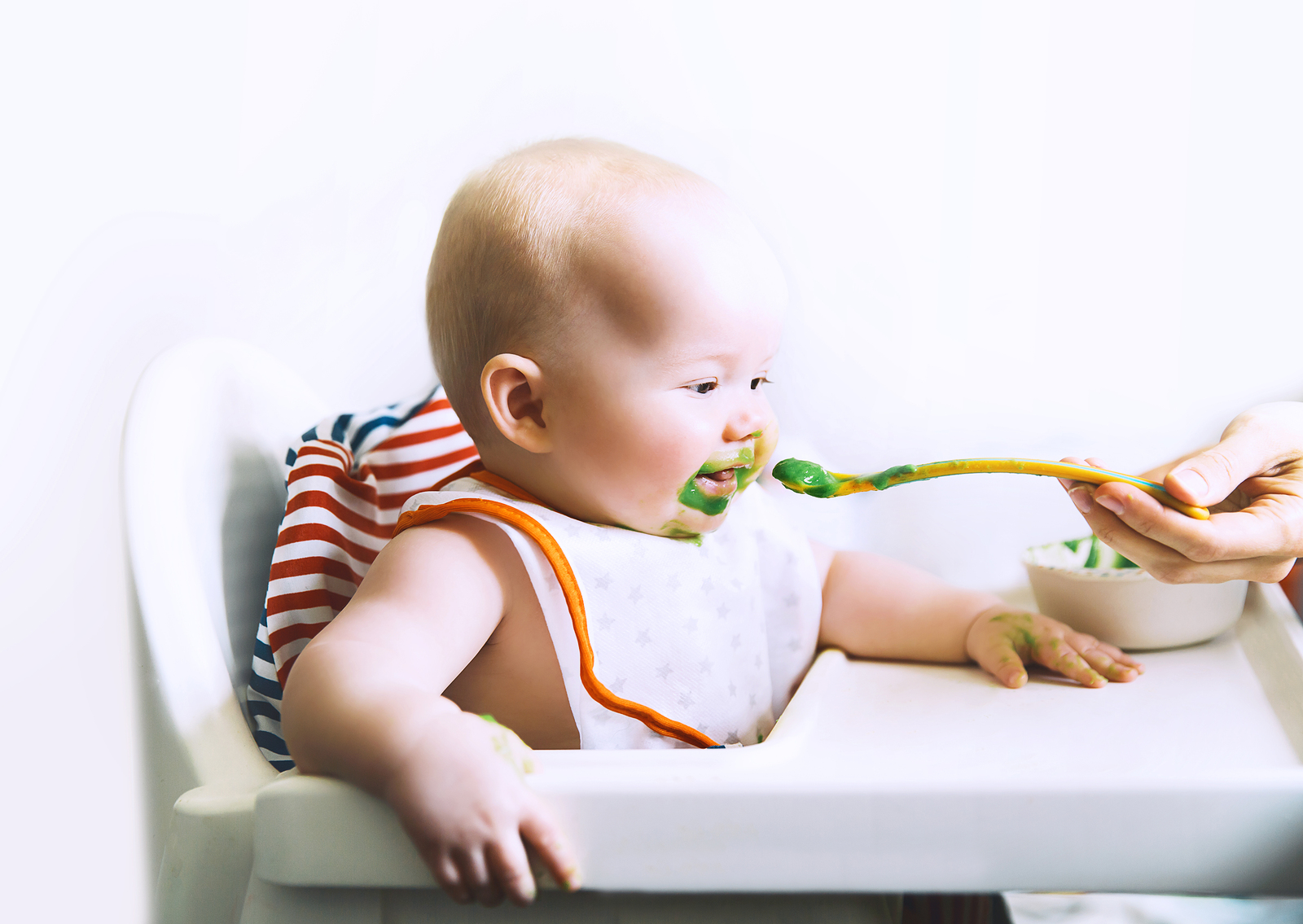
It’s inevitable that at some point your little one will need to make the move from the breast to solid food but it can be very difficult for some parents to make the transition, with a lot of these problems seemingly coming down to a lack of confidence where weaning is concerned.
New research carried out on behalf of Public Health England has revealed that 26 per cent of mothers aren’t confident when it comes to introducing solid foods, with just under half thinking that wanting extra milk is a signal that babies are ready to be weaned, Nursery World reports.
Official advice from the Scientific Advisory Committee on Nutrition is that the majority of babies shouldn’t start on solids until about six months old, as their bodies will be better able to cope with the food by then. They’re also better able to feed themselves and are better at swallowing, chewing and moving food around their mouths.
Orla Hugueniot, nutritionist with Public Health England, said: “Introducing solid foods is an important stage in a baby’s development. It’s a great opportunity to guide their taste preferences and help them learn healthy eating habits that will stay with them for life.”
She went on to say that they’re aware that parents do have lots of questions about this milestone in their child’s life, but the new Start4Life weaning hub puts all NHS advice on this matter in one place, so parents can feel more confident and really enjoy the weaning process.
In terms of what to feed your baby, remember that your child will only need a small amount of solid food once a day to begin with. Start with single vegetables and fruits like soft cooked sticks of carrot, sweet potato, broccoli or parsnip and see how they get on. Make sure that any cooked food has cooled completely before you give it to your little one.
From there, you can then gradually start to increase the amount and variety of food that your baby likes. It’s also wise to ensure that you offer them a range of different foods from different food groups so you know they’re getting enough energy and nutrients.
Mix up the flavours as well so your baby discovers all sorts of different tastes, as this can help be less fussy about food when they’re older. You’re sure to have all sorts of fun yourselves experimenting with different food and finding out what your baby likes and what they don’t.
It’s also key to remember that babies don’t need any salt or sugar added to their food and in fact, salty food can be really bad for their kidneys, while sugar can lead to tooth decay.
Are you on the lookout for a leopard changing bag? Take a look to see what we’ve got on our site right now.