
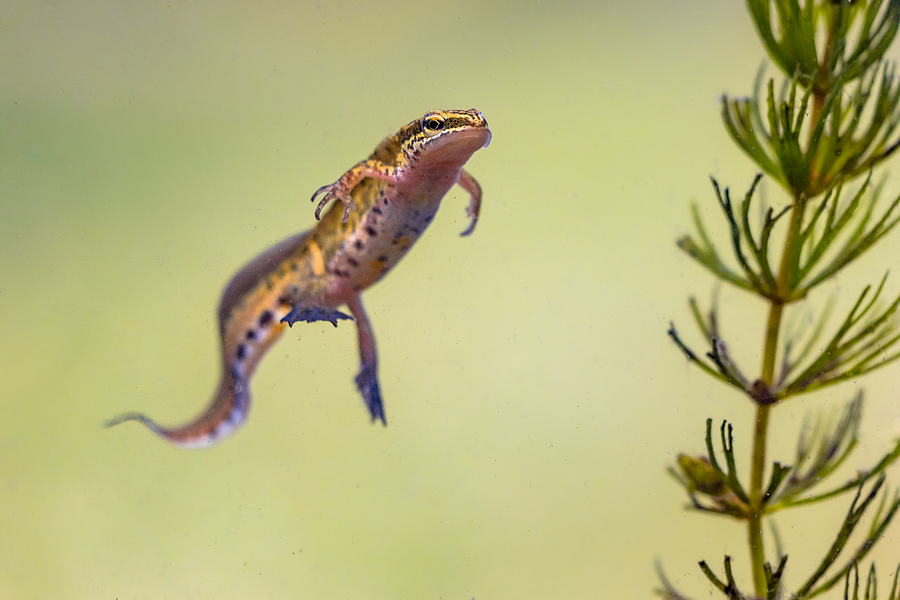
The proximity of a colony of newts was one of the reasons a proposal for a new supermarket in Chelmsford has been unanimously rejected by the city council.
Lidl had planned a new store on land owned by Essex County Council, which had been willing to sell the land to the retailer, but the city was unwilling to pass a plan to build on what has been described as a ‘green lung’, the Yellow Advertiser reports.
The land is known to be a habitat for the great crested newt, which live and breed in a pond at the Buttercup Montessori site. The land is also seen as an important green space for locals and features a Neolithic and Bronze Age enclosure.
Protected in the UK under the Wildlife and Countryside Act 1981, the great crested newt likes to live in clean ponds to breed, the Wildlife Trust notes. For this reason, any new development nearby needs to be kept isolated from the newt habitat to avoid pollution.
The use of newt fencing can also help protect the amphibians themselves when any new development takes place, by helping them avoid straying into harm’s way, such as onto a new road built to the car park of a new supermarket.
In this case, the refusal of the application to build a new Lidl store – three years after concerns about the environmental impact of a proposed care home on the site caused that plan to collapse – means there is no need for further action to protect the newts. Elsewhere, however, remedial measures are often critical to enable a development to progress.
Neighbouring Suffolk recently saw positive steps being taken to help the local great crested newt population. The Eastern Daily Press reported that UK Power Networks joined forces with the Suffolk Wildlife Trust to restore a pond located by the electricity substation at Ilketshall near Beccles.
The restored pond will now offer a viable breeding ground for the newts living there.